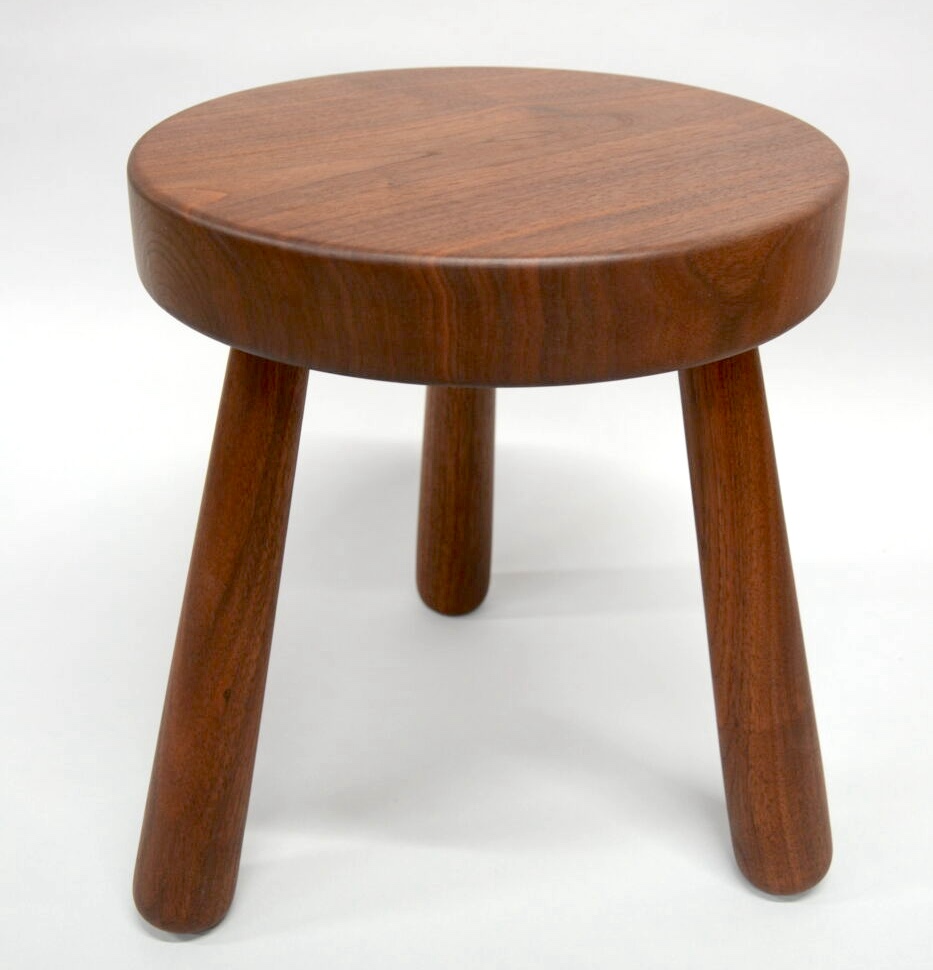

Why Precision & Experience Matters
When you walk into Peter’s workshop, you’re instantly met with the smell of freshly sanded wood, a wall ready to organize an array of tools, and a display shelf filled with newly crafted stools. It’s the home of his business – The Stoolery – where you can find stools made with a variety of wood types, ready for you to sit for a while and relax.
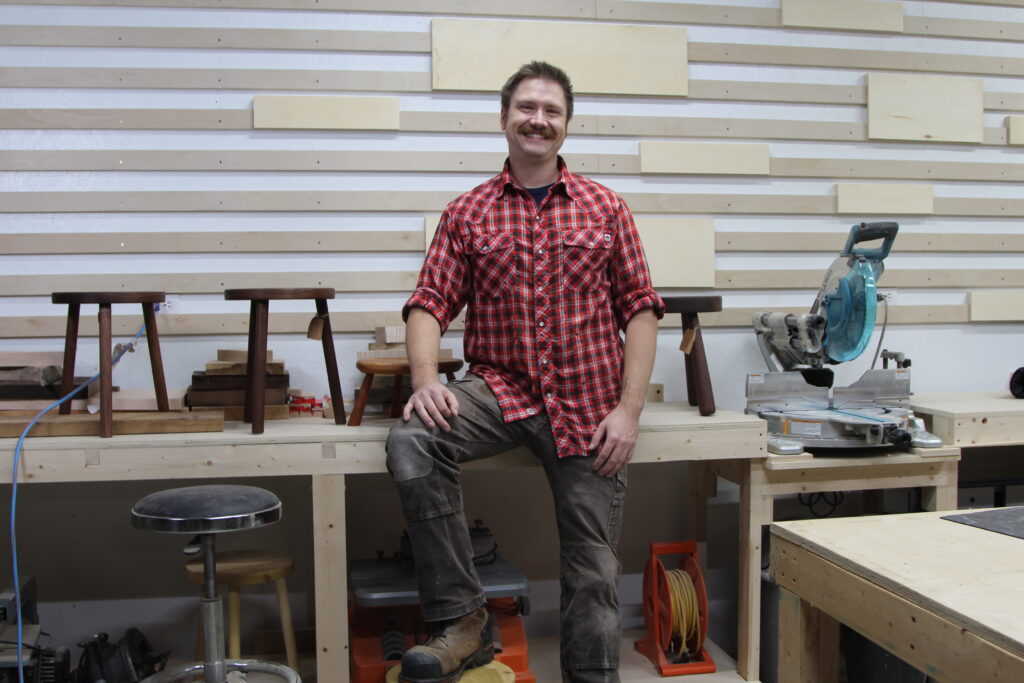
Peter started The Stoolery in 2025. After moving to Highgate, Ontario with his family just a few years ago, Peter decided to put his woodworking skills to work and start making stools. When we visited Peter’s workshop, he showed us each tool and piece of machinery and explained why every step in making a stool matters.
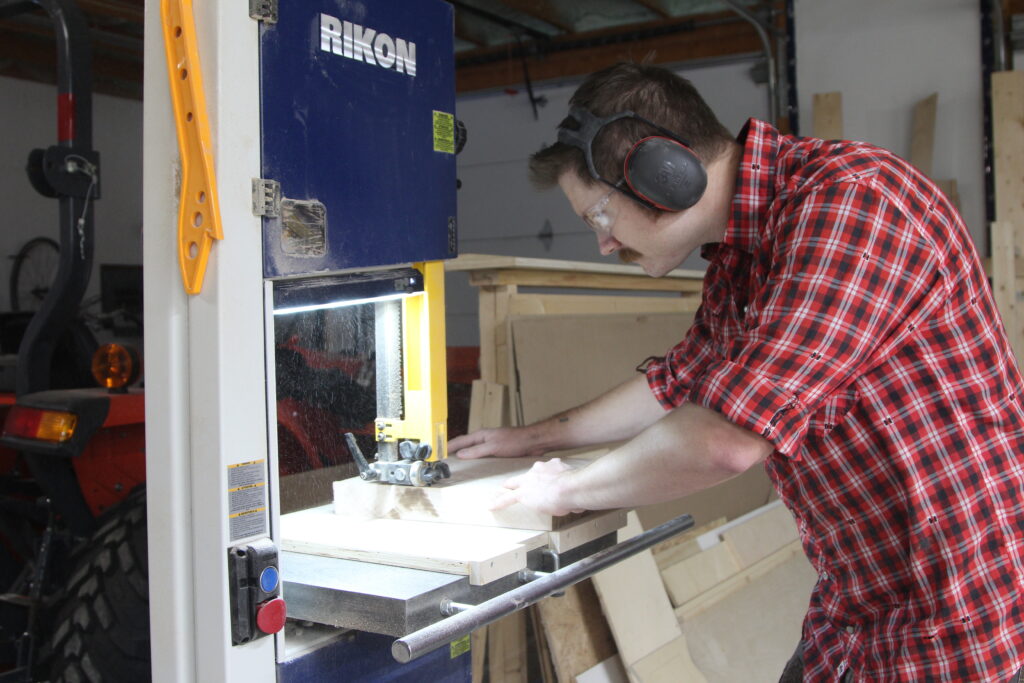
Peter has been passionate about woodworking since he was a child, starting off with learning about the trade in 4-H, taking woodworking classes in high school, and through the woodworking program at Conestoga College. Naturally, he continued this path into the working world.
“My experience spans nearly every part of the trade. Working in lumber and moulding sales taught me about materials and the business side of the industry. Rough and finish carpentry built speed and adaptability on site. Technician work and fine furniture making developed my design thinking, process control, and precision. Over time, it became clear that I wanted full responsibility for designing and building projects from start to finish,” Peter explains.
With a wealth of woodworking knowledge and experience, Peter’s inspiration for The Stoolery came from simpler times.
“I chose stools because I wanted to start at the beginning. Before there was a chair, there was a stool. With so few parts, proportion, joinery, and material selection carry the entire piece. I respect the tradition of making something so humble and useful at the highest level I can,” he says.
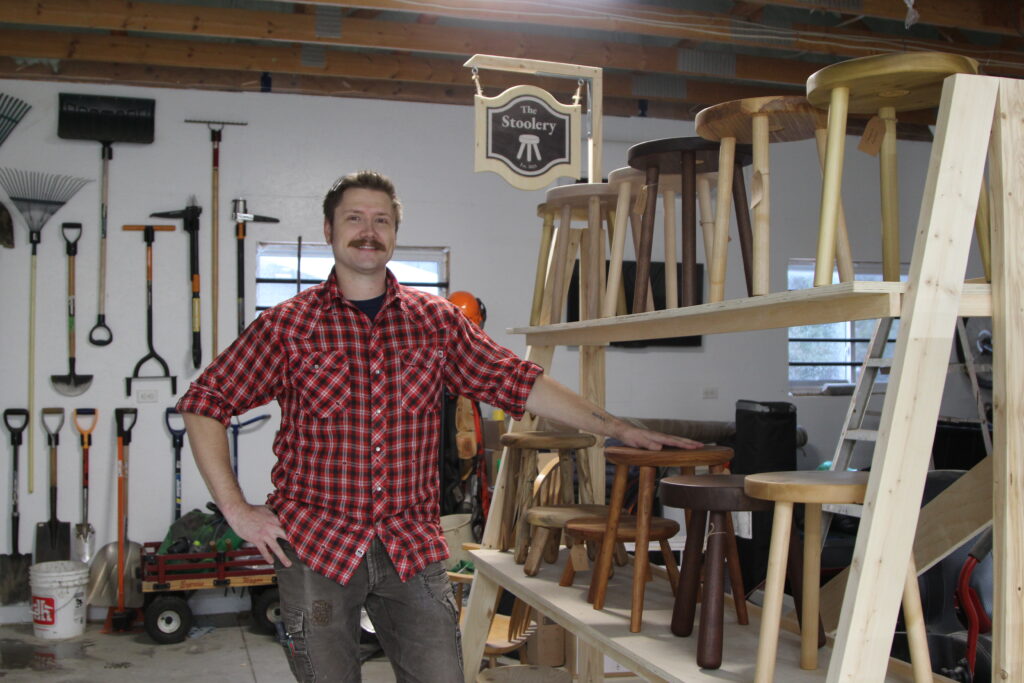
On the surface, a stool is a simple and useful household object. But it takes a lot of experience and precision to make one.
“It starts with the wood. I sort through rough boards one at a time, studying the grain, movement, and character, and deciding what each piece is best suited to become. The material sets the course. The first coat of finish is the reveal. After all the shaping and sanding, the colour deepens and the figure comes forward, showing the character that was hidden in the raw wood. The last step is sitting on it. That moment tells you everything. When it feels solid, natural, and effortless, I know it’s finished,” Peter explains.
So why is a handmade stool made by an expert woodworker better than something mass produced?
“Each stool is designed and built by the same person, start to finish. Proportion, joinery, and material are considered together rather than passed between departments, so the final piece feels cohesive and purposeful. I build from solid Canadian hardwoods using traditional solid-wood joinery, not shortcuts meant for speed. These materials age well, can be maintained over time, and are capable of lasting for generations,” he says.
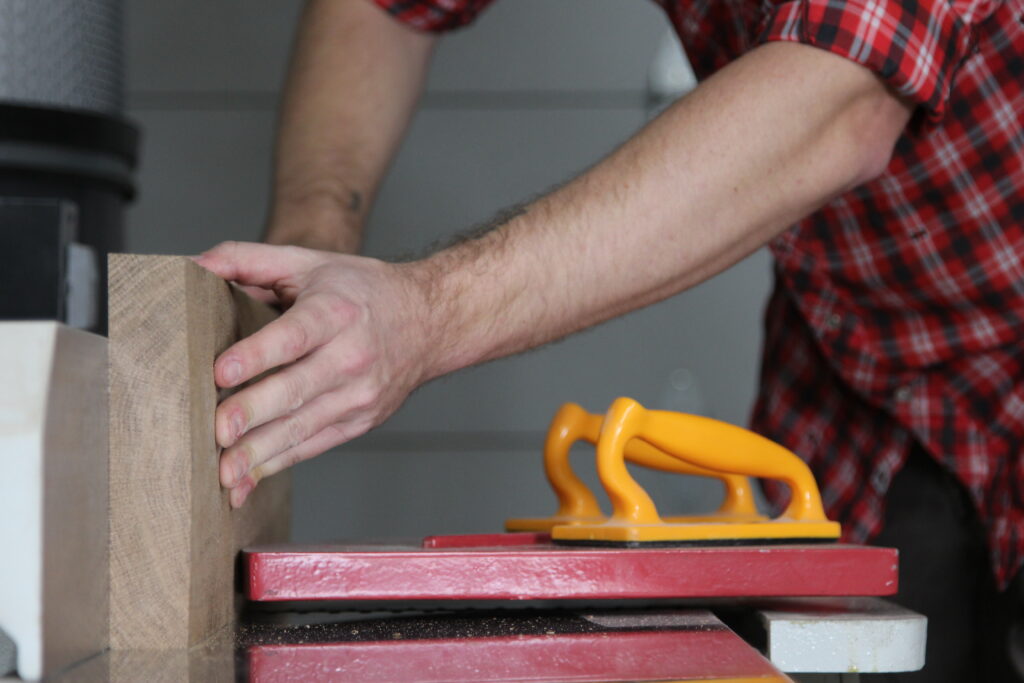
Peter’s stools look perfect because they are. Every step along the way is carefully measured to make sure that everything lines up.
Owning a stool from The Stoolery fills a need you didn’t realize you had.
“It draws attention at first, then earns its place every day. A place to sit while putting on shoes, a boost for the top shelf, a helper for a child at the counter, a quick side table, extra seating when friends gather. It invites use, invites touch, and becomes part of how the home functions, not something that needs to be replaced in a few years,” Peter says.
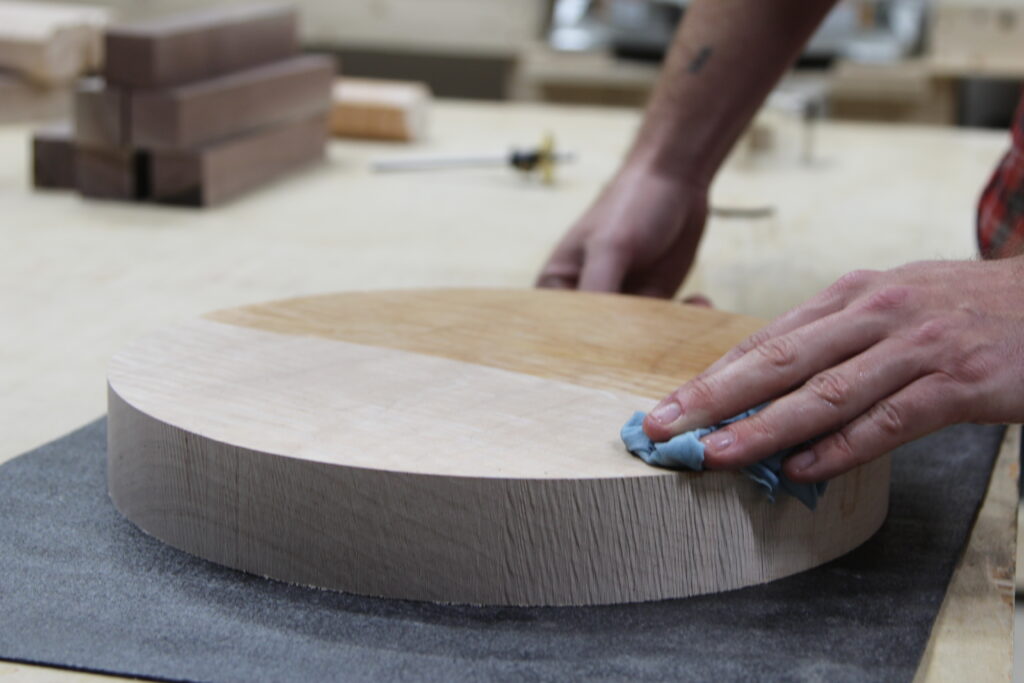
Peter’s care and expertise means that each stool is finished with a soft and smooth surface. No two stools are alike – the uniqueness of the wood grain and refined profiles become clear once the piece is finished.
Peter’s lifelong woodworking experience and passion for the trade reminds us that skills are developed over time. He reminds us that good quality products take time to craft properly using the best materials and methods available.
“Buying local and Canadian keeps skills alive, supports small workshops, and keeps money circulating in the communities we live in. I hope the focus of shopping shifts toward fewer, better pieces in the future,” he says.
We LUV how much care and attention Peter puts into each of his stools. You can see more of his work on his LUVLOCAL store.